
KEYNOTE SPEAKER · BEHAVIOURAL CHANGE EXPERT
It isn’t capability. It isn’t commitment. It isn’t culture.
There’s a pattern beneath your performance data that everyone works around - and nobody names:
Hidden Financial Pressure
(Your people know exactly what it is. They’re just never going to put it on a form.)
I’m Tara Saxon. I put that pattern on stage - and give your room language to do something with it.
20+ years in banking & project finance · 14 countries
KEYNOTE SPEAKER · BEHAVIOURAL CHANGE EXPERT
It isn’t capability. It isn’t commitment. It isn’t culture.
There’s a pattern beneath your performance data that everyone works around - and nobody names:
Hidden Financial Pressure.
(Your people know exactly what it is. They’re just never going to put it on a form.)
I’m Tara Saxon. I put that pattern on stage - and give your room language to do something with it.
20+ years in banking & project finance · 14 countries
Trusted by






















NOBODY TALKS ABOUT MONEY AT WORK .
Everybody performs under the pressure of it.
The pressure your people hide still turns up in the numbers.
(Just rarely under its own name.)
Your organisation may already have a strong wellbeing program, an EAP, and leaders who genuinely care. None of that is wrong, and none of it is wasted.
But those systems were never designed to find the pressure people are working hardest to hide.
Australians experiencing financial stress lose more than 12 productive hours a week — most of it while still showing up to work.*
And that pressure doesn’t stay neatly inside someone’s bank account. It shows up in how people think, decide, communicate and perform.
What they’re carrying often doesn’t feel like something you’d take to a hotline.
The problem isn’t that your people won’t use the support. It’s that nobody has named the pressure in a way that feels safe enough to act on.
That is the conversation Tara puts in the room.

*AMP Financial Wellness Report 2022

*AMP Financial Wellness Report 2022
So why are your best people still burning out, checking out, or walking out?
(And why does nobody ever say the real reason out loud?)
So - what if the problem was never your people's grit?
Let's stop treating the symptoms - the absenteeism here, the resignation there, the meeting where somebody snapped and couldn't say why - and start naming what's driving them.
Private pressure doesn't stay private. It turns up in how people lead, decide and perform - and it can intensify the psychosocial risks your organisation is already required to manage. That makes it more than a culture question.
What if all of that is being driven by pressure nobody has known how to name?
That is The Undercurrent™.
PRIVATE PRESSURE. VISIBLE PERFORMANCE. ONE PATTERN UNDERNEATH BOTH.

Meet The Undercurrent™
THE FRAMEWORK BENEATH THE KEYNOTES
Private financial pressure rarely announces itself as financial pressure.
It surfaces somewhere else — in the conversation a leader avoids, the decision somebody second-guesses, the margin handed back before anyone asked for it.
The Undercurrent™ maps where that pressure shows up at work: how people lead, how they decide and how they perform.
Once the pattern is visible, people have language for it — and leaders have something they can actually work with on Monday morning.
I'm Tara Saxon - speaker and behavioural change expert. I spent two decades inside banking and project finance. Now I work on the psychology of financial pressure at work
PRESSURE DOESN'T STAY PRIVATE. HERE'S WHERE IT SURFACES:
01
LEAD
Private pressure changes how people show up for others — what they avoid, what they tolerate, what they hear and what they miss.
02
DECIDE
It shapes judgement, confidence and risk — especially when the stakes rise and nobody knows what else is driving the decision.
03
PERFORM
It surfaces in behaviour: hesitation, distraction, disengagement, unnecessary discounting and the quiet performance gaps nobody can quite explain.
01
LEAD
Private pressure changes how people show up for others — what they avoid, what they tolerate, what they hear and what they miss.
02
DECIDE
It shapes judgement, confidence and risk — especially when the stakes rise and nobody knows what else is driving the decision.
03
PERFORM
It surfaces in behaviour: hesitation, distraction, disengagement, unnecessary discounting and the quiet performance gaps nobody can quite explain.
(And no - it never sounds like a finance talk. Nobody gets told what to do with their money. By design.)
You don't need another resilience speaker.
You need the one who says the quiet part out loud.
My promise?
To be the easiest yes you take to your committee this year.
I’m here to help you…

The booking nobody
has to defend
Two decades inside banking and project finance. Fourteen countries. Main stages, boardrooms and mixed audiences. The credibility — and the roomcraft — are already handled.
Built for your room, not adapted to it
Your sector. Your pressures. Your people's language. Nothing off the rack — and nobody sitting there wondering whether they're hearing last month's talk.
Something for the
post-event report
Not just applause. A room with language it didn't have before, conversations that keep moving after the lights come up, and something more useful than “great speaker” in the post-event survey.
Because your people deserve truth-telling, not finger-wagging - and your event deserves to be the one they remember for the right reasons.
And yes - a session about hidden pressure can leave a room lighter than it found it. That's rather the point.
20+
Years inside global banking and project finance.
14
Countries across a career on stages, in boardrooms and inside organisations.
138+
Presentations, workshops and coaching conversations decoding hidden pressure.
0
Budgeting lectures, product pitches, or stock tips. Ever.
"She had control of the entire room from start to finish ..."
" ... including everyone dialled in remotely."
David Furse, City of Las Vegas
Booking the brave topic shouldn't raise your heart rate.
Here's how it works - in three steps.
Step 1:
The conversation
Tell me about your event, your people, and what's not being said. One call - straight answers, and a proposal you can hand up the line. No forms that die in inboxes.
Step 2:
The build
I shape the session around your brief - the sector, the sensitivities, the outcomes you're on the hook for. No recycled keynote with your logo on slide one. You'll know exactly what your room will hear before they hear it.
Step 2:
The build
I shape the session around your brief - the sector, the sensitivities, the outcomes you're on the hook for. No recycled keynote with your logo on slide one. You'll know exactly what your room will hear before they hear it.
Step 3:
The ripple
Fast forward to the day after: the thing nobody was saying is now the thing people have language for. And if you want it to travel further — workshops, programs, coaching — the door’s already open.


What it looks like when the pressure finally has a name
A room that leans in - not braces
No polite nodding. No phones under the table. I've watched a site supervisor ask a question in front of his whole crew - the kind of question that tells you the wall just came down. The topic everyone avoids becomes the one the room won't let go of.
The resignation that doesn't have to happen
When the strain surfaces, people can ask for help before they hand in notice. Support gets used before the exit interview, not explained in it. That's the difference between a resignation you're paying to replace, a claim with your organisation's name on it, or margin your best people gave away without being asked - and a conversation you had in time.
What you've built, still standing
This is the long game: a workplace where pressure shows up early, gets named without drama, and is dealt with before it compounds. What you've spent years building - still standing, still yours.
MEET TARA SAXON
Part banker, part pattern-hunter - and 100% done with organisations paying for a problem no one will say out loud.
For years, financial pressure sat in the wrong boxes.
The financial planners owned the money conversation.
The wellbeing world owned the human one.
But the place where the two collided — where private pressure started changing decisions, behaviour and performance — had no owner.
So I claimed it.
I spent more than two decades inside banking and project finance — Arthur Andersen, NAB, BankWest and American Express — watching high-performing people make decisions that made perfect sense on paper and very little sense in real life.
The numbers were rarely the whole story.
Nobody named it. Everybody paid for it.
Now I bring that commercial background together with behavioural change expertise to put the hidden layer on stage — clearly, safely and without turning the room into a finance lecture.
I'm not a financial planner. I'm not a wellbeing speaker.
I'm the speaker working at the intersection of money, behaviour and performance — where the quiet pressure becomes visible enough to do something about.

Here's the thing -
This is not a finance talk.
Nobody is leaving with a spreadsheet.
Nobody is getting sold a product.
Nobody is being asked to disclose their bank balance to the person beside them.
And nobody is getting a lecture about “better money habits.”
I’m also not here to tell your people to be more resilient while ignoring the pressure they’re already carrying.
I’m here to name what that pressure is doing — clearly, commercially and without making the room weird.
People feel seen. Nobody gets exposed.
That’s the whole point.
Here's the thing -
This is not a finance talk.
Nobody is leaving with a spreadsheet.
Nobody is getting sold a product.
Nobody is being asked to disclose their bank balance to the person beside them.
And nobody is getting a lecture about “better money habits.”
I’m also not here to tell your people to be more resilient while ignoring the pressure they’re already carrying.
I’m here to name what that pressure is doing — clearly, commercially and without making the room weird.
People feel seen. Nobody gets exposed.
That’s the whole point.
One undercurrent. Two ways in.
Start with the stage.
Go deeper from there.
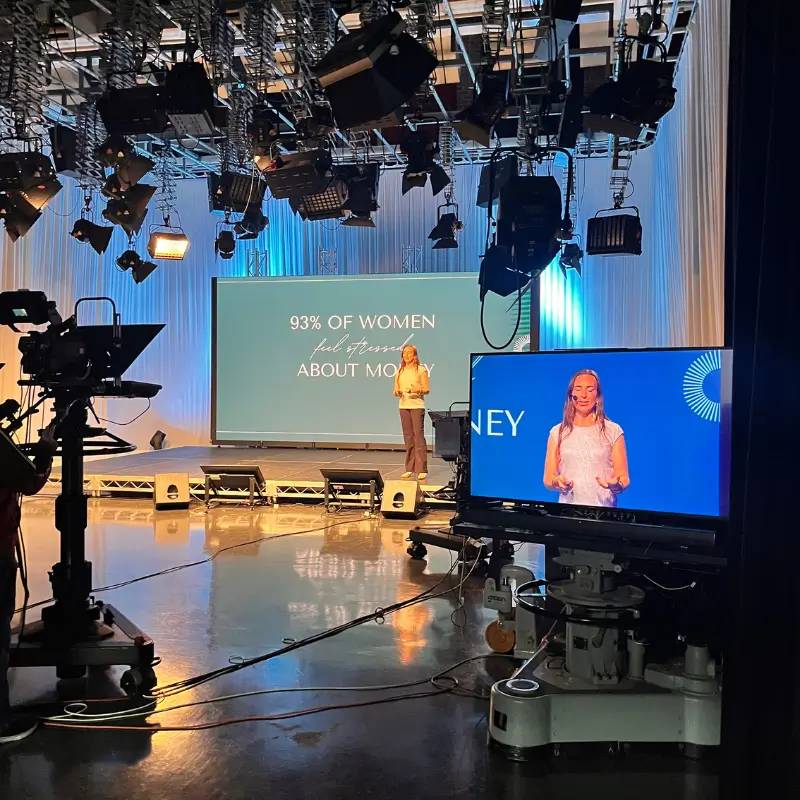
Path 1:
Start with the keynote
The session that names what your industry hasn’t been saying — built for your room, not dropped into it.
If you want the conversation to go deeper, pair it with a workshop on the same visit, planned together from the start.
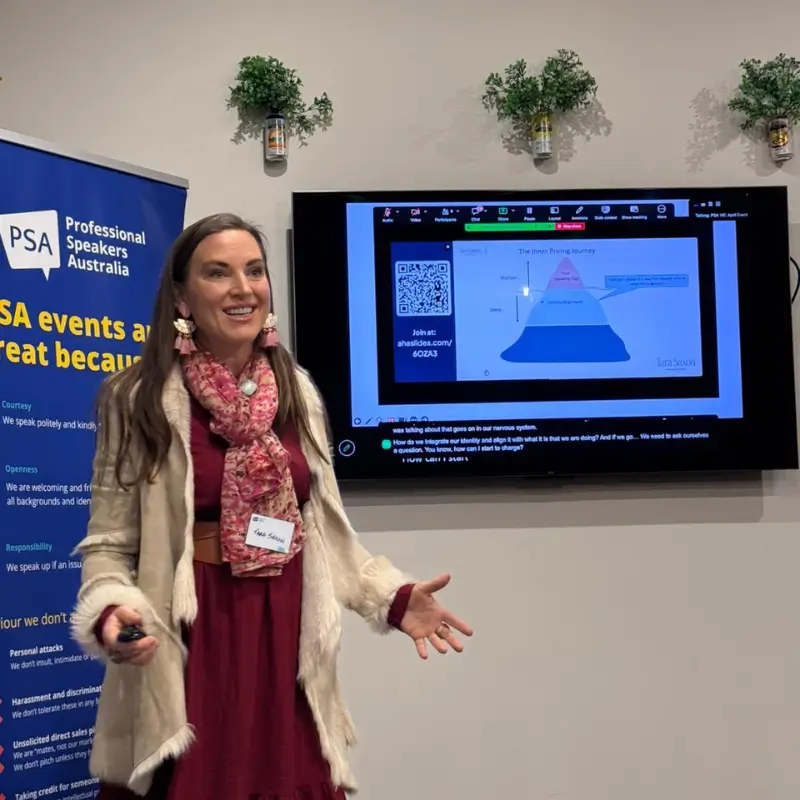
Path 2:
Bring it inside
For organisations ready to move beyond awareness — workshops, team coaching, executive coaching and embedded programs that carry The Undercurrent™ from the stage into everyday behaviour.
Not sure which door?
Tell me what needs to be different afterwards, and I’ll recommend the right format.

"Tara connects with her audience in a way that creates a safe space - one in which participants can be honest with each other and themselves."
"At a recent conference for our organization, Tara was a keynote speaker and facilitated a workshop. She is a consummate professional to work with - attentive to details, responsive, and flexible. Her storytelling was passionate and held people's attention from start to finish."
Robin McCartney
Senior HR Analyst - city of las vegas

"Our organisation is changed from having worked with her."
michael lockie,
hr manager - walcha council
IF TODAY’S NOT THE DAY
Take the ledger with you.
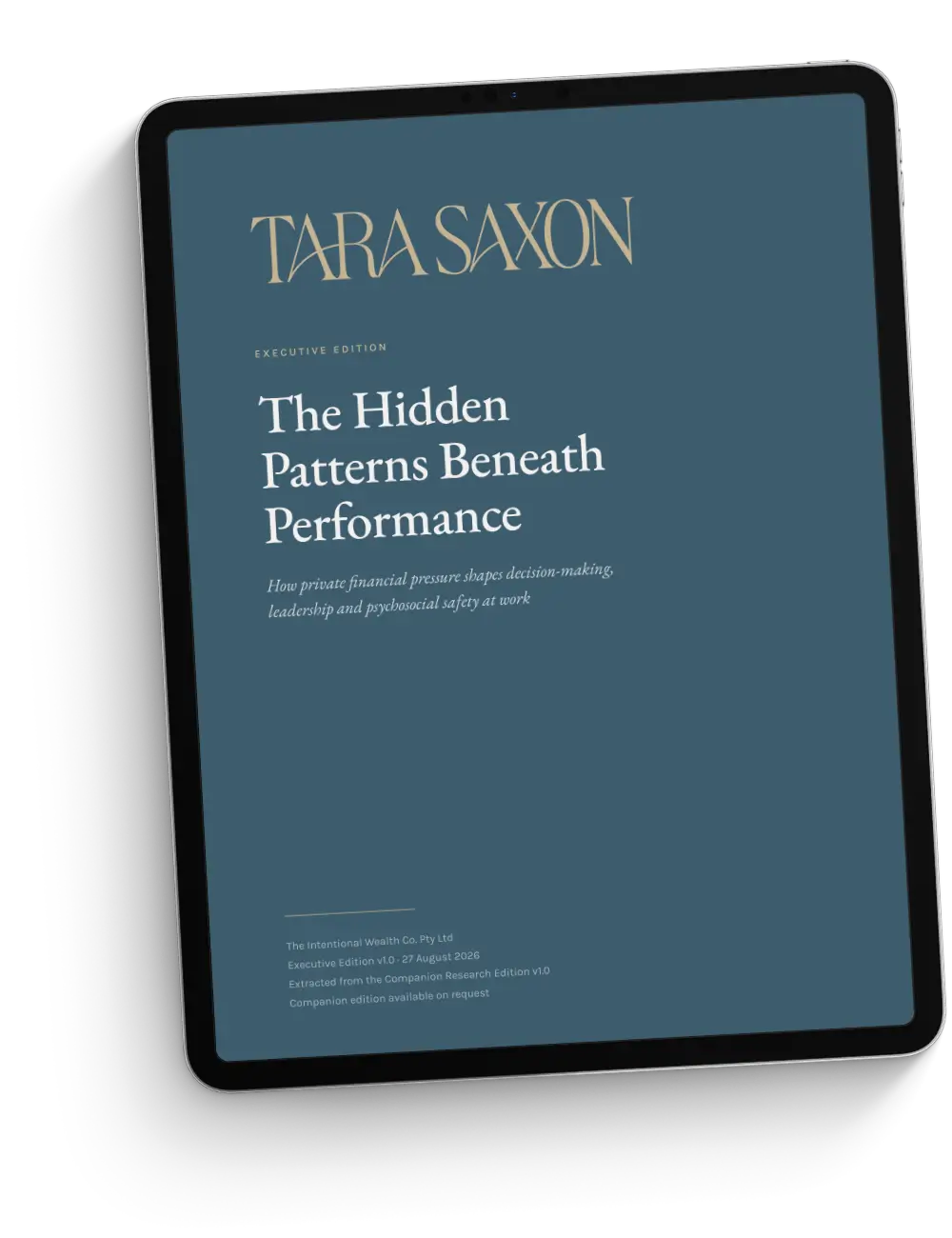
The Missing Line Item is a one-page worksheet for putting your own numbers against the pressure this page has been describing.
It has a habit of turning “not yet” into “actually, now.”
The evidence behind the keynote — and the cost most organisations still aren’t counting.
Start with the number.
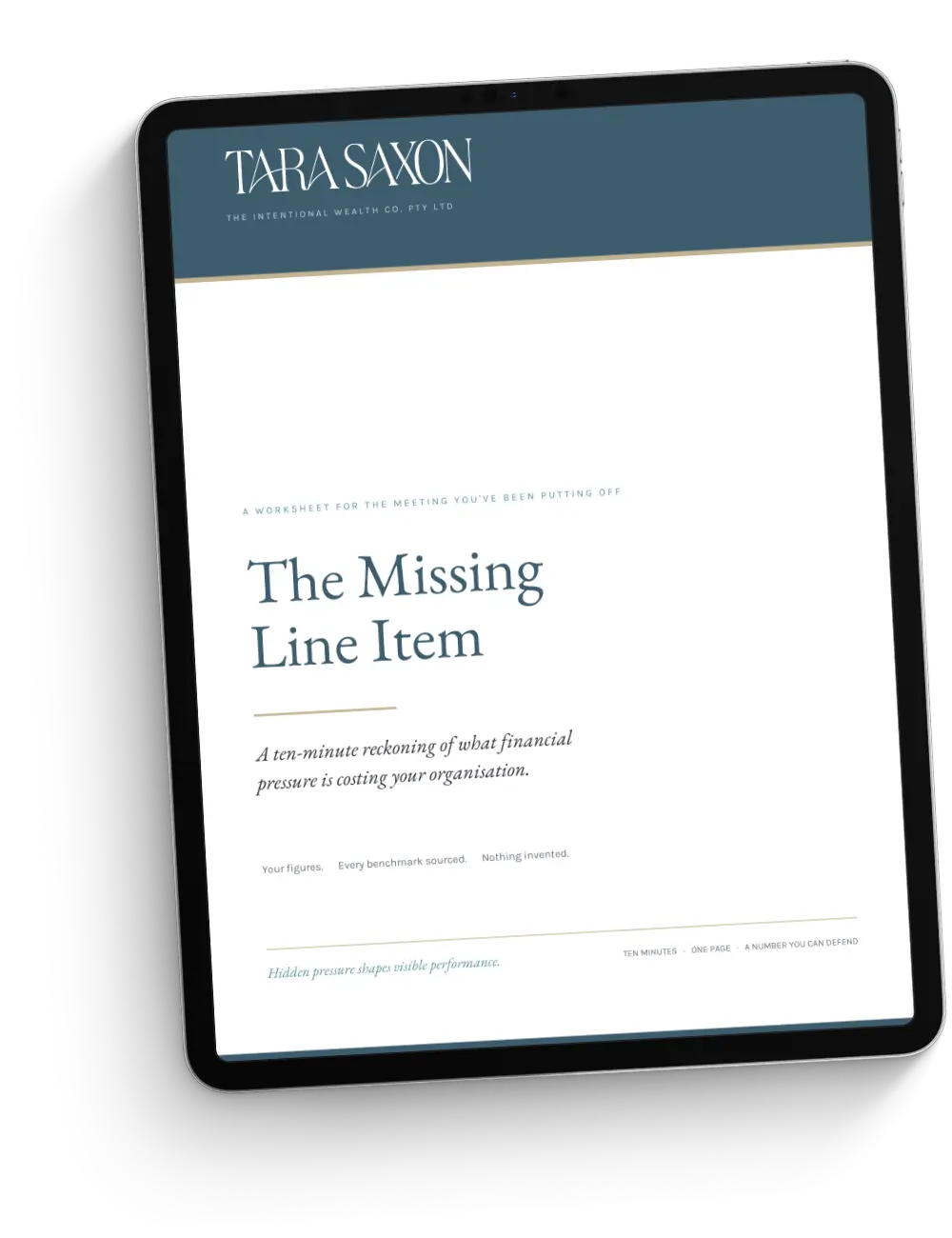

Hidden pressure shapes visible performance.
Here for personal money coaching?
That lives at certifiedmoneycoach.com →
P.S. You devoured the whole page. That kind of tenacity? We'd get along.
Tara's work addresses the human side of financial pressure - behaviour, patterns, and performance.
It's education, not financial advice: no products, no recommendations, no exceptions. For personal financial advice, talk to a licensed professional.